
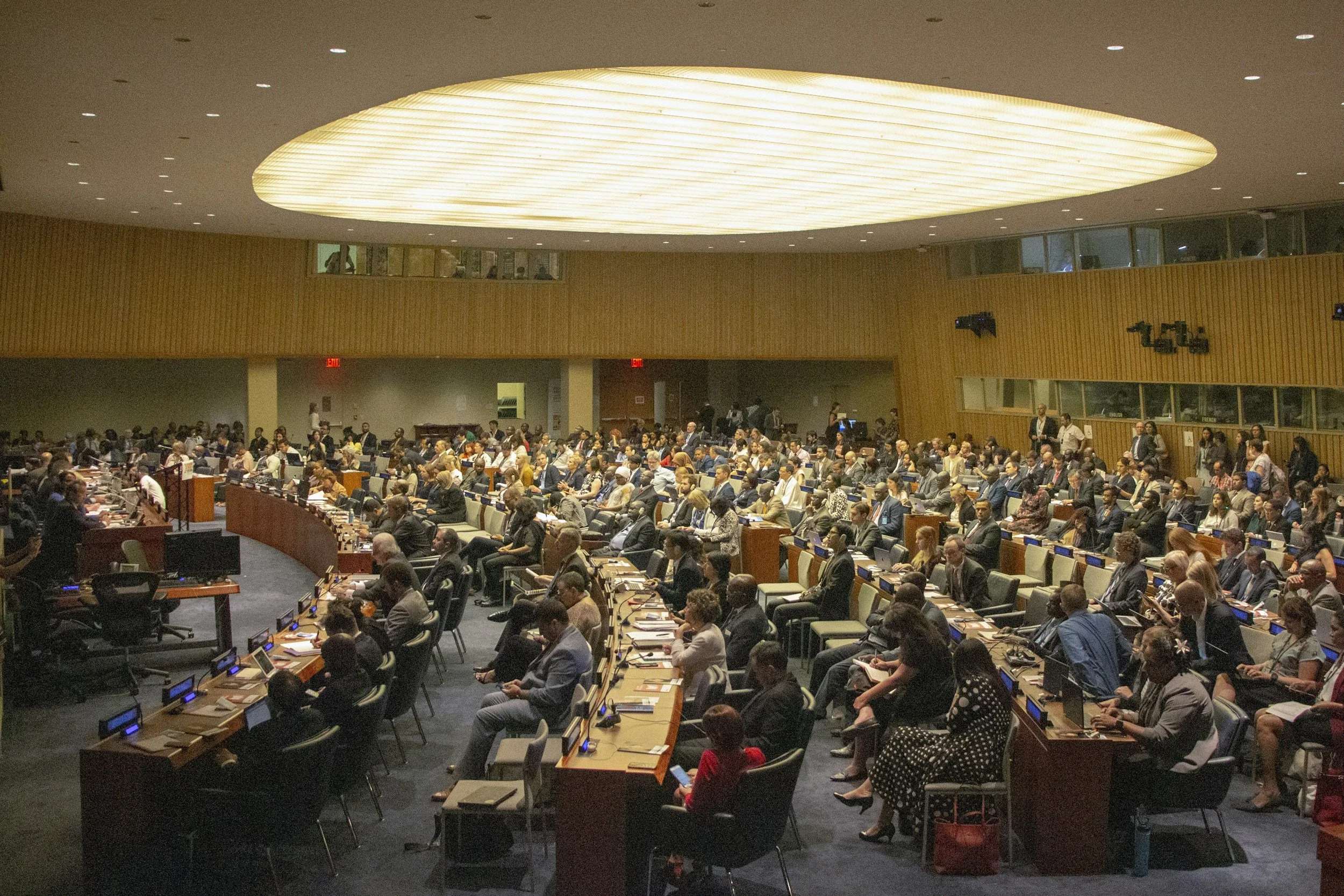
SOCHUM
The Social, Humanitarian, and Cultural Committee, or the Third Committee of the United Nations General Assembly is an international body which focuses on pressing social, humanitarian, and cultural issues that affect communities worldwide. The committee has the authority to discuss a wide range of affairs with the aim of promoting a safer and more peaceful world. Topics under discussion in SOCHUM committees are wide and significant, as cultural and social debates invite fundamental questions about justice, welfare, and human rights. The committee is invested in protecting the rights and liberties of marginalised groups, devoted to the protection of women, children, indigenous peoples, and all others.
SOCHUM is a major UN body and its annual eight-week session is participated by all 193 member states which all have equal voting rights in a simple majority vote. Non-member states and permanent observers may attend and participate in meetings without voting power. Resolutions passed at the committee, like other committees in the General Assembly, are not legally binding, meaning that actions are only recommended but not enforced.
The Past
The Social, Humanitarian, and Cultural Committee was established in 1947 according to the Charter of the United Nations. It became the third of the six committees under the General Assembly. The creation of the committee responds to the need to promote peace and advance human rights in the post-war period. One of the committee's significant achievements was its involvement in the drafting and adoption of the Universal Declaration of Human Rights in 1948. This landmark document set out fundamental principles for the protection and promotion of human rights globally.
The Present
The committee has in recent years remained seized of the question of human rights. Oversight of the Human Rights Council, established 2006, has been a key point in recent SOCHUM discussions. The general commitments of the committee are an ever present in consideration and debate - the rights of women and indigenous peoples feature heavily, alongside questions of social justice and development in cultural issues. The centrality of human rights to the SOCHUM agenda cannot be stressed enough.
The Future
Having played so vital a role in the formation of the Universal Declaration of Human Rights and demonstrating so active an ongoing interest in the proper application of human rights commitments, any SOCHUM committee session should endeavour to safeguard human rights in any given issue. The committee has displayed an acute regard for the rights of marginalised groups, championing those who are without a voice themselves. The committee considers a range of pressing social, humanitarian, and cultural issues at each meeting, the majority of which are considered in light of human rights conventions. As delegates it will be your task to appreciate these broader commitments to justice, welfare, and human rights in your consideration of specific cultural and humanitarian issues.