

Two committees at GlobalVoices 2026 will not sit still. One takes delegates into the struggle for Rome's future after Caesar's assassination. The other explores the international order in 2075, and the tensions that could reshape it. Here is what to expect, and how to thrive.
Most Model UN committees move at the speed of a speakers' list. Crisis committees move at the speed of a rumour. At GlobalVoices 2026, two crisis committees will meet in the Examination Schools from Friday 27th to Sunday 29th November. They have very different worlds and the same rule: what you write changes what happens next.
Two Worlds
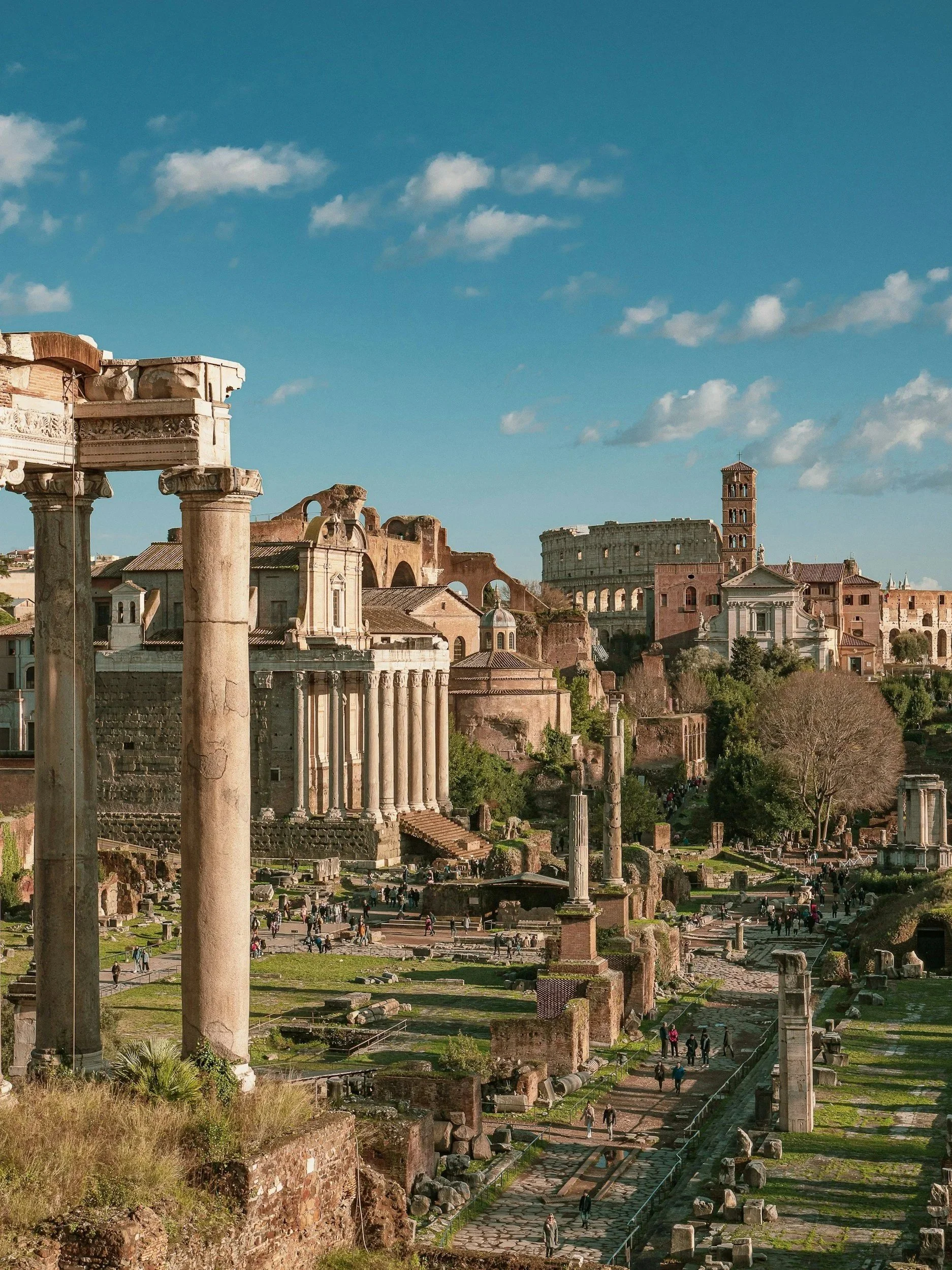
The Fall of the Roman Republic takes delegates into a Roman world shaken by Julius Caesar's assassination. His killers call themselves liberators. His friends call them murderers. His money, his papers, his soldiers and his name are all suddenly up for grabs. Thirty-five delegates play the individuals who must decide what comes next: senators and generals, bankers and scholars, Caesar's family and his rivals, and the kings and the queen who watch from beyond Italy. Is the Republic worth saving? Can it be saved? And if not, who should inherit Caesar?

2075: The Rise of a New World Order explores a future in which the rules of international cooperation are under strain. The world described in the Background Guide is multipolar: a reformed Security Council, competing financial systems, computing power as a strategic resource and a changing climate that is already moving people across borders. Forty-five delegates represent thirty-six states and nine international institutions. They gather to decide whether the institutions built after 1945 should be defended, reformed or replaced. With competing powers, fragile alliances and institutions under pressure, the question is whether cooperation can survive when national interests collide.
What makes crisis different
In a standard committee, you debate a topic and write a resolution. In a crisis committee, the topic moves. The dais releases crisis updates during each session: news, intelligence and the consequences of what delegates have done. Each one becomes fact.
You respond in two ways. Public directives are proposals the whole committee debates and votes on, and they pass by simple majority. Private directives are your own moves, written to the crisis team: a letter to an ally, a loan, a quiet investigation, a deal nobody else knows about. They need no vote. Every one gets an answer, and the answers shape the story.
Sometimes the crisis team will write back with an unexpected offer, a new threat or information that changes everything. Do you trust your allies? Do you act alone? And how much are you willing to risk to get what you want?
How to do well
Know your character or country. Read your section of the Background Guide twice. What can you actually do? A Roman banker can lend money; a Roman senator can propose a law; a head of an international institution can lend, inspect or convene, but cannot order a government around. Directives that stay within real powers succeed far more often.
Be specific. A vague directive such as “We will stop the enemy” is unlikely to succeed. Instead, explain exactly what you intend to do, including who will be involved, what resources you will use, and how you will respond if things don't go to plan.
Build alliances, and expect them to shift. Crisis rewards delegates who talk to everyone. It also rewards those who assume that letters can be read by the wrong people and that friends have their own plans.
Write good notes, not many notes. You can have one private directive waiting for an answer at a time. One careful plan is worth five rushed ones, and quieter delegates often turn out to have the most influence by the final session.
Play the character, respect the people. Crisis is drama, but it is never an excuse to attack real people, groups or beliefs. Violence stays off-stage, and the Chair can return any directive that goes too far.
Who Runs It
Behind each committee sits a crisis team of OG staff and students from Oxford. They read every directive, write every answer and keep the story moving. While the Chair manages the debate, the crisis team works behind the scenes, responding to delegates' plans, introducing new developments and occasionally throwing a carefully constructed strategy into complete chaos.
Why it is worth it
Crisis teaches things a standard committee cannot. Where else can you negotiate a secret alliance, attempt a political coup or find yourself dealing with the consequences of a spectacularly unsuccessful diplomatic gamble — all before lunch?
Rome has a great deal of history to argue with. 2075 has none yet. In both rooms, the ending is still unwritten.
Before you arrive: read your Background Guide, prepare three goals, find two likely allies, and think of one plan you would rather keep to yourself. Then bring a good pen. You will need it.