
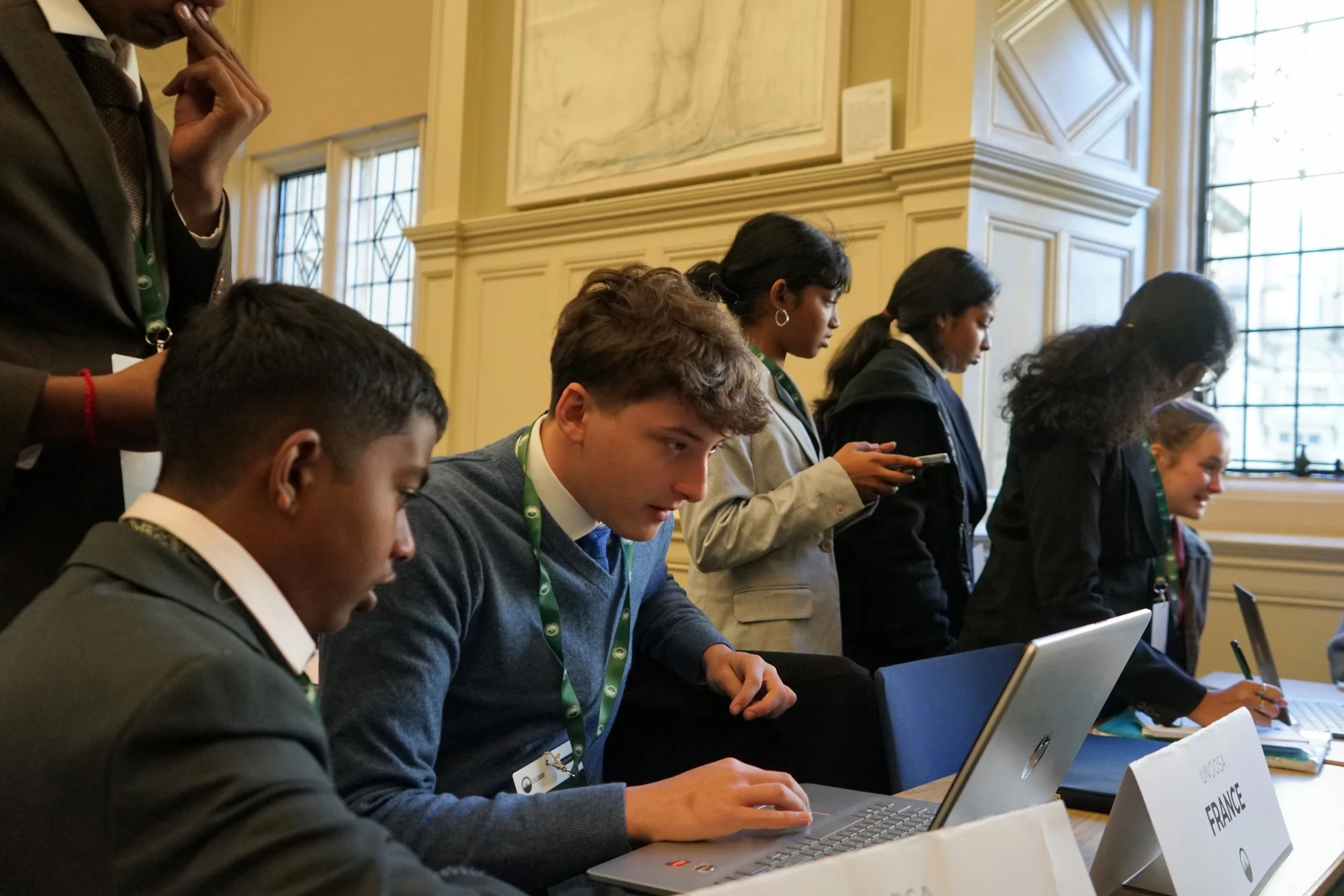
Walking into your first Model United Nations committee can feel intimidating. It can seem like everyone else already knows the rules, the vocabulary, and exactly when to raise their placard. In reality, most delegates are learning as they go, and at NoviceNations…that is the point! This conference is designed to be supportive and beginner-friendly, which means you are not expected to be perfect. You are expected to arrive prepared, to participate, and to treat other delegates with respect as you work towards solutions together.
This blog posts gives you a practical guide to what you can do before and during the weekend to feel confident quickly and make valuable contributions in committee.
1) Start with your country, not the topic
Most first-time delegates begin by researching the issue in general and only later think about their assigned country. A stronger approach is to anchor everything in your country’s perspective from the beginning, because that is what will shape your speeches, negotiations, alliances, and the kind of resolution you can realistically support.
You should be able to explain, in plain language, what your country’s main interest is in the topic, what it is likely to prioritise, and what it would be unlikely to accept. Even a little clarity here will make you feel much more confident in debate, because you’re not trying to invent the “perfect” solution on the spot (when under time-pressure) - you’re speaking from a clear country position.
A useful check is to ask yourself a simple question: if another delegate challenges you with “Why would your country support that?”, could you answer in one sentence? If you can, you have done enough to begin.
2) Read your Background Guide with a purpose
A Background Guide is not just a summary of the issue; it is a set of hints about what the committee needs to produce. First-time delegates sometimes read it like a textbook and then feel stuck when debate begins. Instead, read it like you are preparing to propose policy.
As you read, keep looking for four things:
What the problem actually is
Why it is difficult to solve
What has already been attempted
What realistic “routes forward” exist
Make a short list of the organisations, treaties, or UN bodies already involved, because referencing existing mechanisms is one of the easiest ways to sound credible as a beginner.
By the end of your reading, you should have a small set of “building blocks” you can speak from (e.g. a few key facts, a clear sense of constraints, and two or three plausible solution directions).
3) Keep your position paper simple and usable
A position paper is most valuable when it becomes a tool you can rely on in the committee room. For first-time delegates, the most effective position papers are clear and practical rather than long or overly formal.
A strong beginner-friendly structure is:
Your country’s view of the problem
What it is most concerned about
What it wants the committee to do
If you include just a few pieces of evidence (e.g. a statistic, an example, or a named programme), you will instantly find it easier to speak with confidence.
Finally, add two to four specific proposals that you can push for during drafting.
For the formatting requirements for position papers, head to the ‘Preparation Materials’ page.
If you are attending NoviceNations 2026, remember that position papers must be submitted via OG Hub by 30 January 2026. It is also worth keeping your paper accessible during committee so you can quickly pull out your main points when you need them.
4) Prepare speech ‘structures’ rather than memorising speeches
You do not need to memorise long speeches to do well. In fact, memorised speeches can make you sound less natural and less responsive to the action in the committee room. What helps most is having a few reliable structures you can use whenever you speak.
For example, your opening speech can follow a simple shape: one line that frames the problem, one line stating your country’s position, two priorities, and a final line inviting collaboration. Beyond that, it is useful to prepare two short “interventions”: one where you agree with another delegate and add a practical detail, and one where you disagree politely but offer a compromise.
If you have these patterns ready, you will feel calm when called upon, and you will sound organised even if you are nervous!
5) Speak early, even if it is brief
Many first-time delegates wait until they feel completely confident before speaking. The issue is that confidence tends to come after your first contribution, not before it. The best way to settle your nerves is to speak once early, even if your speech is short. This could be as simple as agreeing with (i.e. showing support for) another delegate.
You can also take pressure off yourself by aiming to ask a question in the early stages of debate. Questions show that you are following the discussion and they often feel easier than giving a long statement. Once you have spoken once, the next time becomes noticeably easier.
6) Use unmoderated caucus to be useful
Unmoderated caucus can feel fast and messy at first. The good news is that it rewards organisation, clarity, and helpfulness - which means beginners can have a big impact without needing to dominate conversation.
You can contribute by offering to take notes, suggesting how to group ideas into themes, drafting a clause, or helping merge two drafts together. You can also strengthen proposals by asking practical questions such as who would implement an idea, how it would be funded, and how success would be measured. These are the questions that turn a vague suggestion into a workable resolution.
If you are unsure what to say, a simple line like “What would this look like in practice?” can move the whole group forward.
7) Aim for solutions that are specific and implementable
Beginner delegates often write solutions that sound good but do not actually do anything. Phrases like “encourages cooperation” or “raises awareness” are not automatically wrong, but they only become strong when they lead to concrete action.
When you propose an idea, try to make it answer four practical questions:
Who is responsible?
What action will be taken?
How it will be carried out?
How progress will be monitored?
It often helps to build on existing systems (e.g. strengthening a current UN programme, creating reporting requirements, funding training, or establishing coordination between specific bodies).
8) Diplomacy = a strategy
A delegate can be persuasive without being aggressive. In fact, “winning the argument” rarely helps a committee reach a resolution. What matters more is your ability to negotiate, compromise where appropriate, and keep relationships constructive.
If you disagree with an idea, you can acknowledge the intention behind it while raising a concern and offering an alternative. If you want support for your own proposal, framing it as a shared benefit rather than a personal victory makes it easier for others to join you.
Chairs tend to notice delegates who improve the tone and productivity of the room, because that is what makes a committee succeed.
9) What Chairs notice in first-time delegates
At a beginner conference like NoviceNations, your Chairs are not expecting flawless procedure or perfect delivery. They are looking for delegates who are prepared, engaged, and willing to learn.
That usually shows up as clear, structured speaking; active listening; practical contributions during drafting; and a collaborative attitude. One of the most reliable ways to stand out is to show visible progress across the weekend (e.g. speaking a little more confidently, becoming more precise in your proposals, and helping your bloc move from ideas to a finished resolution).
A final note before you arrive
Most delegates do not feel confident in their first committee session; the ones who thrive are the ones who participate anyway. If you know your country’s basics, have a few usable proposals, and commit to speaking early, you will settle in quickly, and you will likely finish the weekend with far more confidence than you expected. Good luck!